
how native coastal plants can inform garden design.
It’s been a hot one, maybe the hottest and this has made us all take a long hard despairing look at our frazzled gardens whilst wondering if it’s time for a rethink. Yet, while our Dahlias have been desiccated and our Hydrangeas have dehydrated the flora on my local beach has not missed a beat.
The fauna of highcliffe beach, dorset
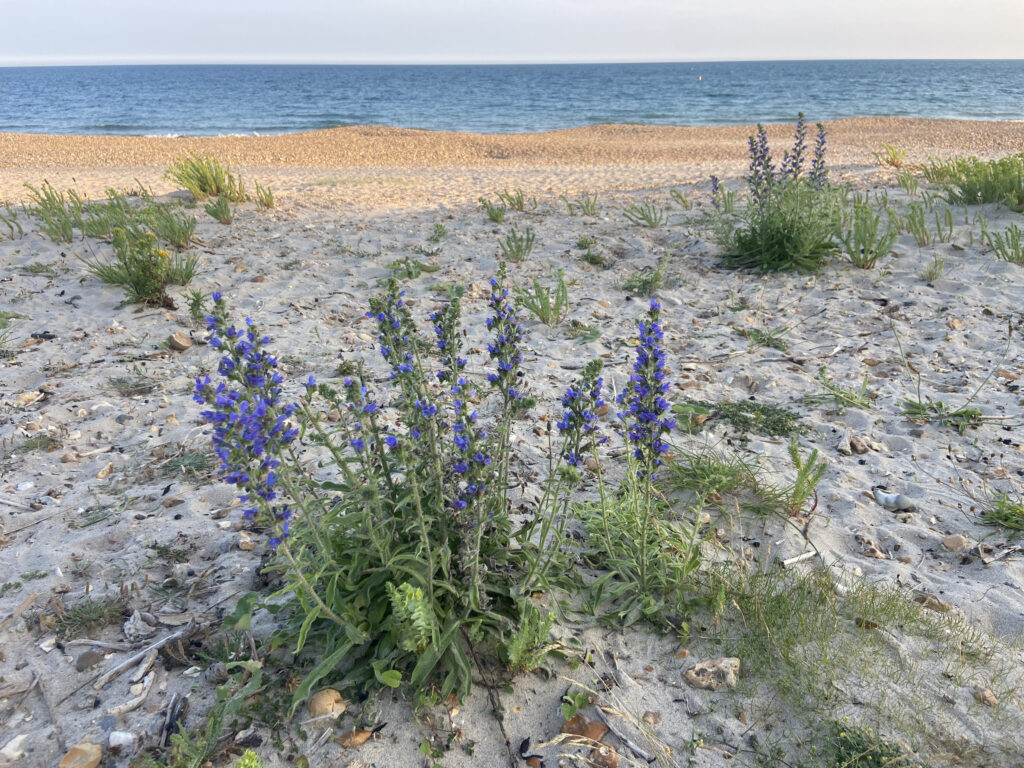
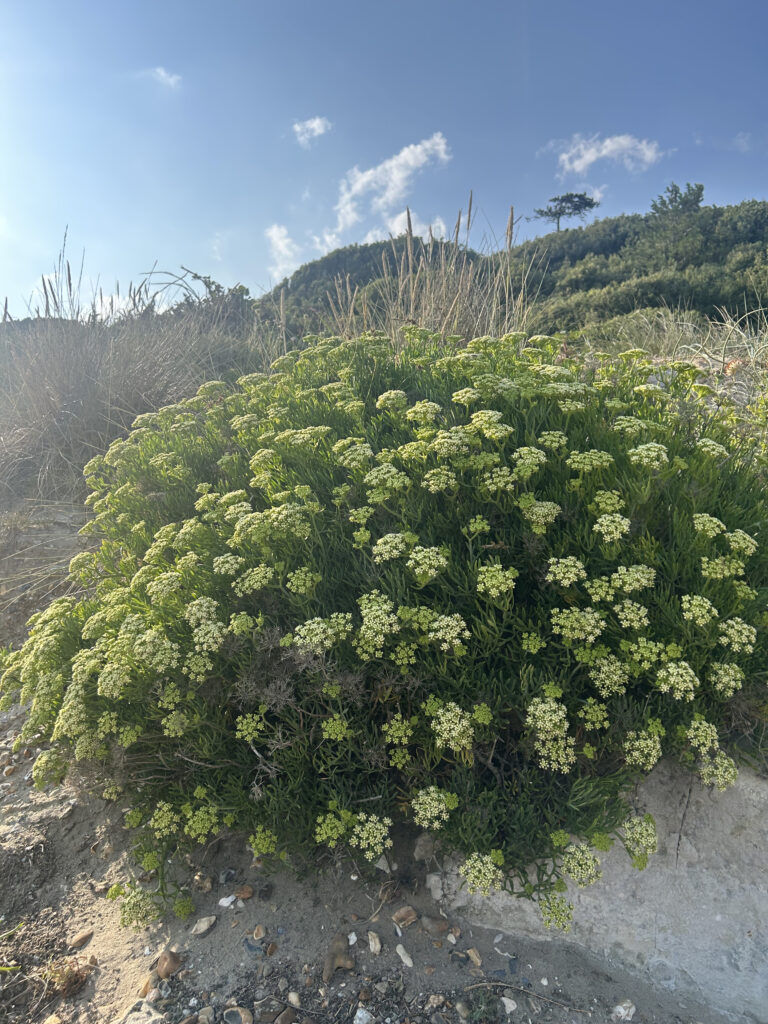
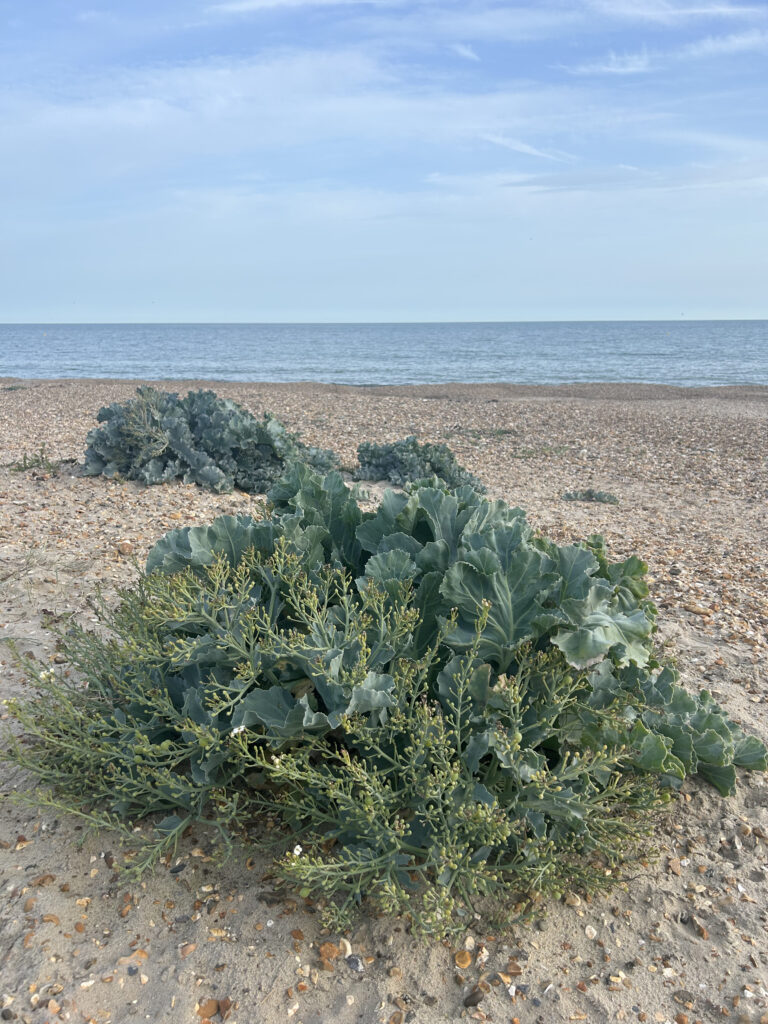
Here on the south coast of Dorset we love to spend time on the beach, swimming, surfing and messing about with the kids, however as they will testify I’m always the last into my swimmers. I’m too busy enjoying the wonderfully diverse native plant life a lot of which is really hitting its peak late June and early July. Swathes of Euphorbia paralias carpet the sandy areas, punctuated by fat mounds of Crambe maratima, an edible sea kale. Pollinators have a veritable beach party over the Echium vulgare and Crithmum maritimum, another edible widely known as rock samphire softens the rocky outcrops with it’s lush fleshy foliage. These are the stars of the show taking centre stage close to the high water mark. Along the cliffs the backing band includes a line up of naturalised Quercus ilex, Tamarix and Pinus pinaster.
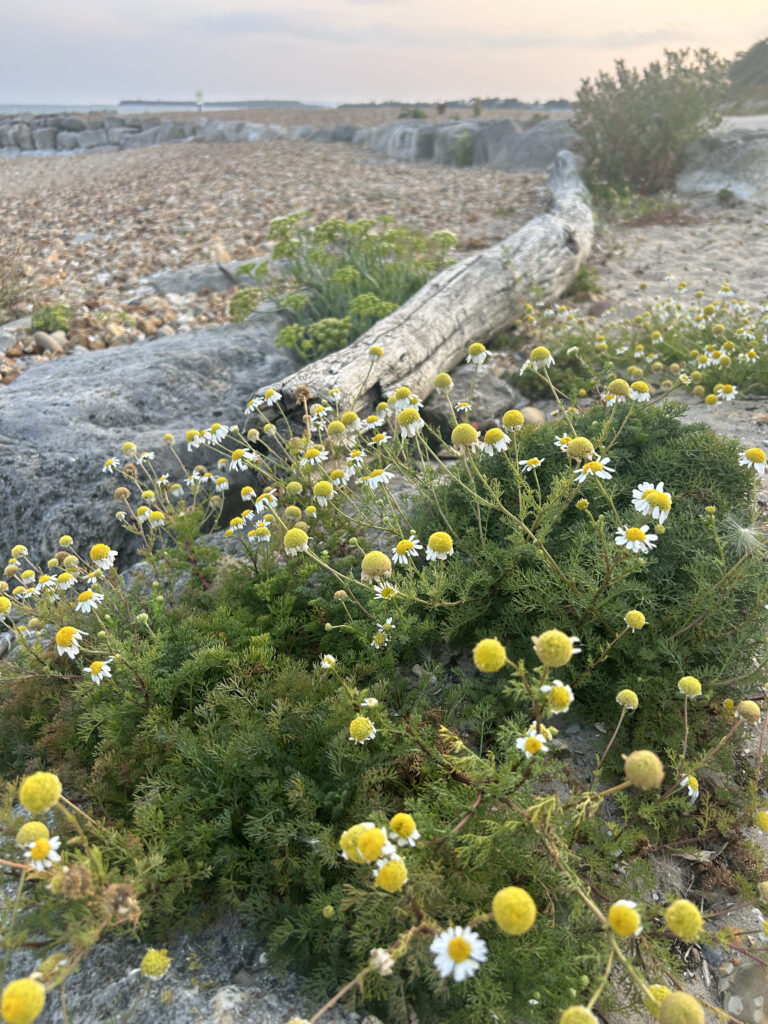
These plants are literally living life on the edge, mainly growing in nothing but sand and shingle with constant exposure to drying, salt laden winds. But are they garden worthy? Should we dig up our Peonies and replace them with Sea Kale? The plants on my local beach may not have an Award of Garden Merit but they all feature on the RHS website under the plants for pollinators banner and all have their own unique charms not often found in the garden centre.
designing for coastal conditions
When it comes to rethinking our own gardens I think we can learn a lot from these rufty tufty pioneers. Front gardens in particular. Everyone wants low maintenance at the front right? In my area there’s a lot of quite large, open frontages mainly laid to lawn with minimal planting and a blockwork driveway. I really like the idea of tying these spaces to the landscape beyond. What we often don’t realise is that we’re creating coastal conditions in our front gardens anyway. Building work creates piles of rubble and many homeowners turn to gravel as a cost effective driveway. This creates the free draining, nutrient poor growing conditions that coastal and coastal-esque plants thrive in.
using native and non-native plants
Imagine a gravel garden filled with a mix of native drought tolerant shrubs and perennials. You’re at the beach as soon as you walk out of your front door. For a more refined look you could go for cultivated equivalents. Pennisetum ‘fairytales’ could be your Maram Grass and Euphorbia characias subsp. wulfenii would make a more showy display than its native cousin the Sea Spurge. Shrubby trees such as Arbutus unedo, Hippophae rhamnoides and Tamarix are perfectly adapted to life by the sea and have tonnes of character that would improve the street scene of any seaside locale.
So what I’ve learn’t from going to the beach is that the growing conditions in your garden can never be too bad so long as you choose the right plants. To do this you need to look to the surrounding landscape and ask why some plants are doing so well. Most of all just relax and work with what you’ve got. After all, life’s a beach.
For an example of our work in this area look at our design for a coastal front garden in Christchurch.
If you would like us to bring coastal vibes to your garden then please get in touch
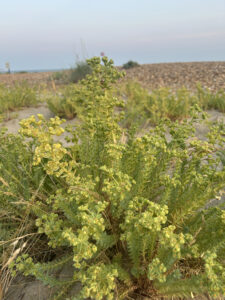
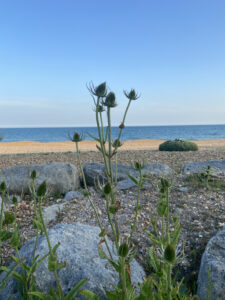
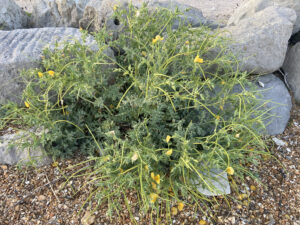
All pictures taken by the author on Highcliffe beach in Dorset.